If you’ve fallen behind on your mortgage in Wisconsin and you’re staring at letters from a lender or papers from the Sheriff, this page is for you. I’m Mike Messmer, founder of Cash House Buyer WI. I’ve been buying homes directly from Wisconsin homeowners for over 30 years — more than 500 of them — and a meaningful number of those have come from people in exactly the spot you’re in right now. Behind on payments. Worried. Not sure what they should do.
Here’s what I want to tell you upfront: Wisconsin foreclosure is slower than most people think, the windows of time you have to act are real, and selling your home before the sheriff sale is usually the cleanest way to preserve the equity you’ve built up. But after the court confirms the sheriff sale, your options end. There’s no general statutory right of redemption in Wisconsin after the sale is confirmed. That’s the single most important fact in this entire process, and almost no one tells you about it plainly.
Below is the honest, plain-language version of how Wisconsin foreclosure actually works under Wis. Stat. Ch. 846, where you are in the process right now, what decisions are still available, and where a cash sale fits — when it does, which is not for every homeowner. I’m not going to pressure you. I’m going to show you the math and the timeline, and you decide.
Wisconsin Foreclosure — The Basic Procedure
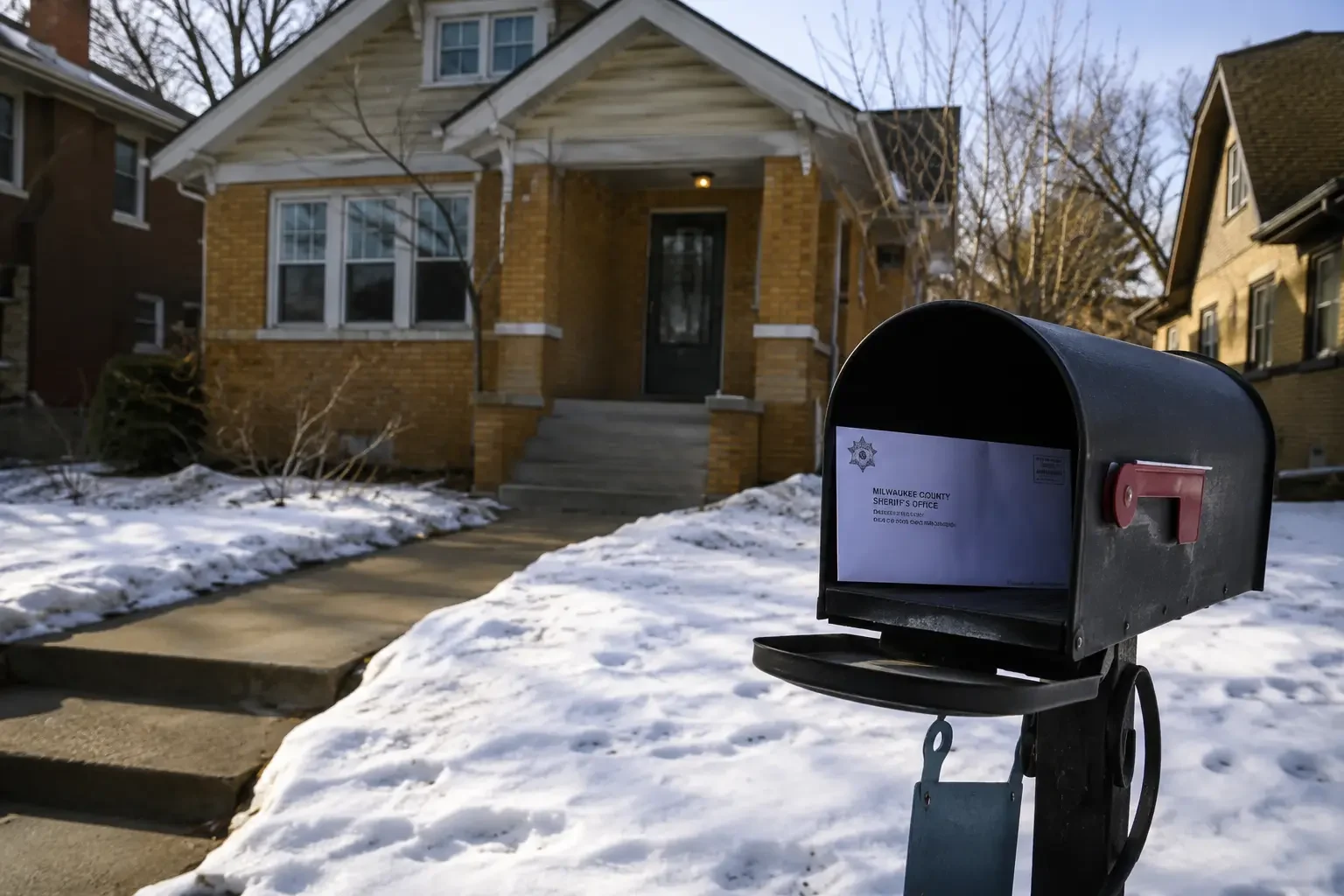
Wisconsin is what’s called a judicial foreclosure state. That means the lender can’t just take your house — they have to file a lawsuit in your county’s Circuit Court, give you notice, and let the court supervise the entire process. The whole thing is governed by Wisconsin Statutes Chapter 846. This is good news for homeowners. It means you get more notice, more time, and more chances to act than people in non-judicial states like Texas or Tennessee.
Here’s the basic sequence:
1. You miss payments. The lender sends notices, makes phone calls, offers loss mitigation. Under federal CFPB rules, the lender generally can’t file foreclosure on most owner-occupied loans until you’re more than 120 days delinquent.
2. The lender files. A foreclosure Complaint is filed in your county’s Circuit Court. You’re served a Summons and Complaint, usually by the sheriff or a process server. You have 20 to 45 days to file an Answer (the exact window depends on how you were served).
3. The court enters judgment. If you don’t file an Answer or if the lender prevails on the merits, the court enters a Judgment of Foreclosure. This is the procedural step that starts the redemption clock.
4. The redemption period runs. For owner-occupied residential property, this is typically 12 months from judgment if the lender keeps the right to a deficiency judgment, or 6 months if the lender waives the deficiency. Wis. Stat. § 846.10.
5. The sheriff sale. Once the redemption period expires, the sheriff (or a court-appointed referee) conducts a public auction. Notice of sale is published in a local newspaper for several weeks.
6. Court confirmation. The sheriff files a report of sale; the court reviews and confirms the sale (or, rarely, sets it aside). Confirmation transfers title to the purchaser. There is NO general statutory right of redemption in Wisconsin after confirmation. That’s the procedural cliff.
What Sellers Say About Cash House Buyer WI

“I hadn’t seen the house in 3 years. They still bought it.”
The property was falling apart and full of junk. Cash House Buyer WI gave me a fair offer and handled everything. I didn’t have to step inside once.

Jason Beezely
“The city was threatening to fine me. Cash House Buyer WI stepped in fast.”
I thought I was out of options. They gave me a cash offer in one day and closed before things got worse.

Pamela Newsom
How Long Does Wisconsin Foreclosure Actually Take?
Most Wisconsin foreclosures take 8 to 14 months from the lender filing in court to the sheriff sale. Add the federal 120-day pre-filing rule on the front end, and the typical total from your first missed payment to the actual sheriff sale runs more like 12 to 18 months. That said, this is a range. Several things can speed it up or slow it down:
Federal 120-day rule: under CFPB regulations, most mortgage servicers cannot make the first foreclosure filing until you’re more than 120 days delinquent. This is your initial breathing room. Use it to call the lender, request loss mitigation, and explore your options — including a cash sale that preserves equity.
- Faster than typical: if the property is abandoned, Wis. Stat. § 846.101 gives the lender a path to a 5-week redemption period after judgment. If the property meets certain owner-occupied/abandonment criteria, Wis. Stat. § 846.102 provides a 2-month redemption period. These require specific elections in the foreclosure complaint.
- Slower than typical: if you file an Answer and contest the action, if the lender pursues mediation, if the property has title problems, or if there are multiple lienholders. Court calendars in Milwaukee County and other larger counties run slower than rural counties.
- Federal 120-day rule: under CFPB regulations, most mortgage servicers cannot make the first foreclosure filing until you’re more than 120 days delinquent. This is your initial breathing room. Use it to call the lender, request loss mitigation, and explore your options — including a cash sale that preserves equity.
Your Real Options at Each Stage
Pre-filing (you’re behind, but no court papers yet)
- Reinstate the loan: bring everything current. If you have the cash and the lender will accept it, this stops the process completely.
- Loss mitigation: call the lender, ask about loan modification, forbearance, or repayment plans. Free help is available through HUD-approved housing counselors — find one near you at hud.gov/findacounselor.
- Sell the home traditionally: list with an agent, take an offer, pay off the mortgage at closing. This works if you have enough time before things escalate and the home is in marketable condition.
- Sell for cash: a written cash offer from a buyer who specializes in this situation. Closes in 1-2 weeks. Pays off the mortgage at closing. Preserves the remaining equity.
Post-filing, pre-judgment (court papers received, judgment not yet entered)
- Reinstate before judgment: under Wis. Stat. § 846.05, if you bring everything current before judgment is entered, the court dismisses the foreclosure entirely.
- File an Answer: contesting the action extends the timeline and sometimes reveals defenses (improper notice, defective documents, predatory lending issues). Talk to a Wisconsin foreclosure attorney about whether you have any.
- Sell now: same as pre-filing. The cleanest path forward is often a sale that pays off the mortgage and preserves the rest of your equity.
Post-judgment, pre-sale (judgment entered, sheriff sale not yet held)
- This is the redemption window. Under Wis. Stat. § 846.10, you have either 12 months (if the lender kept the right to a deficiency) or 6 months (if the lender waived the deficiency). During this window, the sheriff sale cannot happen.
- Reinstate after judgment: still possible under § 846.05, but if you default again, the foreclosure proceeds without restarting. The reinstatement is a stay, not a dismissal.
- Pay off in full (redeem): pay the full judgment amount plus costs and the foreclosure ends.
- Sell during the redemption window: this is the most common cash-sale window. We close, pay off the judgment at closing, and you walk away with whatever equity is left. The sale ends the foreclosure.
Post-sheriff-sale (sale held, court confirmation pending or done)
Practical options after sale confirmation are extremely limited. Bankruptcy might delay an eviction; appealing the confirmation is theoretically possible but rarely successful. The honest version is: by this point, the equity is gone.
After confirmation, there is no general statutory right of redemption in Wisconsin. The court enters an order of confirmation, the deed is delivered to the purchaser, and your interest in the property is gone. If you’re still in the house, the purchaser can request a writ of assistance — a court order directing the sheriff to remove you.
What a Cash Sale With Cash House Buyer WI Looks Like
If you’re in any of the windows above and a cash sale makes sense, here’s how it actually works with my team:
- Step 1: You call me. Direct line to my desk: (414) 246-0032. Or email Mike@cashhousebuyerwi.com. The first conversation is information — where you are in the foreclosure process, what the equity picture looks like, what your timeline is.
- Step 2: I come look at the property. Most Wisconsin foreclosure homes need at least some work, and I’d rather see what we’re working with in person. I’m coming because I’ve done this 500+ times — I’m not a wholesaler sending someone else.
- Step 3: I make a written cash offer, usually within 24 to 48 hours. The math reflects the actual condition of the home and the actual cost to handle the foreclosure (arrears, late fees, costs, any required attorney coordination). No surprises, no last-minute changes.
- Step 4: If you accept, we coordinate with your foreclosure attorney (if you have one) and a Wisconsin title company. The title company handles the lender payoff and the procedural mechanics of ending the foreclosure.
- Step 5: We close. Typical timeline 7 to 14 days. The mortgage and any back amounts get paid off at closing. Whatever equity remains comes to you. The foreclosure ends.
Frequently Asked Questions
How long does Wisconsin foreclosure take?
Typically 8 to 14 months from the lender filing in court to the sheriff sale. Federal CFPB rules generally require the lender to wait 120 days from your first missed payment before filing, so the total timeline from first missed payment to sheriff sale is often 12 to 18 months. Variables include redemption period election (12 months or 6 months under Wis. Stat. § 846.10), court calendar, and whether the homeowner contests the action.
Can I sell my house during a Wisconsin foreclosure?
Yes. You can sell at any point before the court confirms the sheriff sale. The most common cash-sale windows are pre-filing (before lender files in court) and during the redemption period after judgment but before sale. The closing pays off the foreclosure judgment from sale proceeds and any remaining equity comes to you.
Is there redemption after a sheriff sale in Wisconsin?
No, Wisconsin does not provide a general statutory right of redemption after the court confirms the sheriff sale. Once the order of confirmation is entered and the sheriff’s deed is delivered to the purchaser, the former homeowner’s interest in the property is extinguished. This is why acting before the sale is critical.
What’s the difference between reinstatement and redemption in Wisconsin?
Reinstatement (Wis. Stat. § 846.05) means bringing the loan current by paying past-due amounts plus costs — the loan continues. Reinstatement before judgment dismisses the foreclosure; reinstatement after judgment but before sale stays it. Redemption (Wis. Stat. § 846.10) means paying off the entire judgment in full — the loan ends. Redemption applies during the 12-month or 6-month post-judgment window.
How fast can Cash House Buyer WI close on a foreclosure home?
Typically 7 to 14 days from accepting our written cash offer. Mike Messmer coordinates with your foreclosure attorney (if you have one) and a Wisconsin title company to ensure closing happens within the available statutory window. The closing pays off the foreclosure judgment and ends the action.
Talk to Mike Directly
If you’re staring at a Wisconsin foreclosure right now, give me a call. I’ll give you a straight read on where you stand, what the math actually looks like, and what your real options are — including the ones that don’t involve selling to me. No pressure. No high-stakes pitch. Just the honest version. Call (414) 246-0032 or fill out the form. — Mike Messmer, Cash House Buyer WI.