
If your Wisconsin family is looking at independent living, assisted living, memory care, or nursing home placement, the funding math involves real money. Wisconsin assisted living typically runs $4,600 to $6,663 per month (Milwaukee specifically sits at the higher end around $6,663/month per Genworth’s 2024 Cost of Care Survey). Memory care adds $950-$1,375/month on top of assisted living. A private room in a Wisconsin nursing home runs approximately $9,855/month — $118,260 per year — about 1% above the national median. Long-term care insurance covers some seniors but most don’t have it. For most Wisconsin families, the home equity is the bridge that funds the transition.
This page walks through how Wisconsin home equity actually gets converted into senior living funding — what each care level costs, how Wisconsin Medicaid Long-Term Care interacts with home equity, where Wisconsin Family Care and Family Care Partnership fit in the picture, and the practical 5-year lookback timing considerations that affect when and how to move equity. I’m Mike Messmer, 30 years buying Wisconsin homes directly. Here’s the practical version.
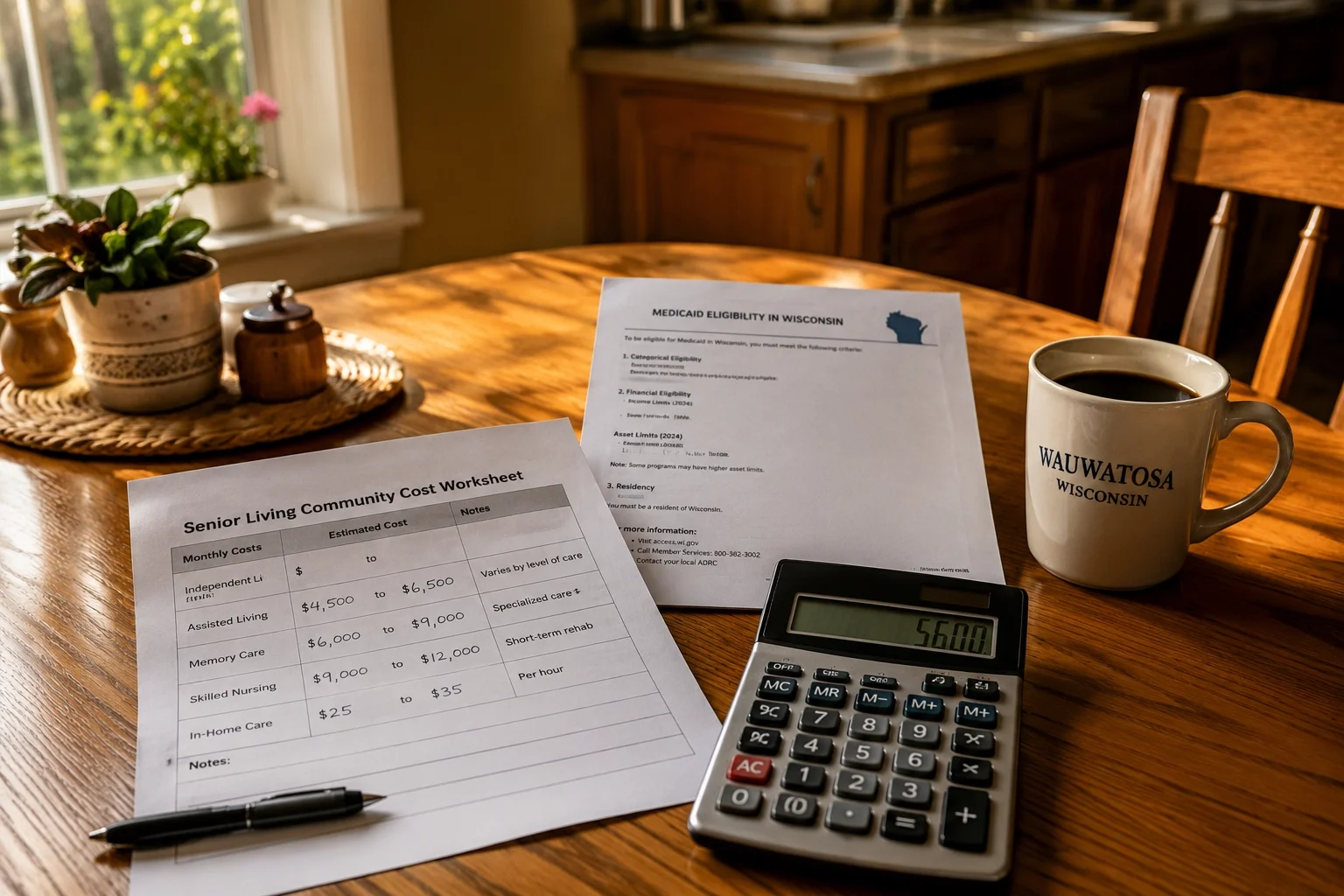
Wisconsin Senior Care Costs — What Each Level Actually Costs
Independent Living
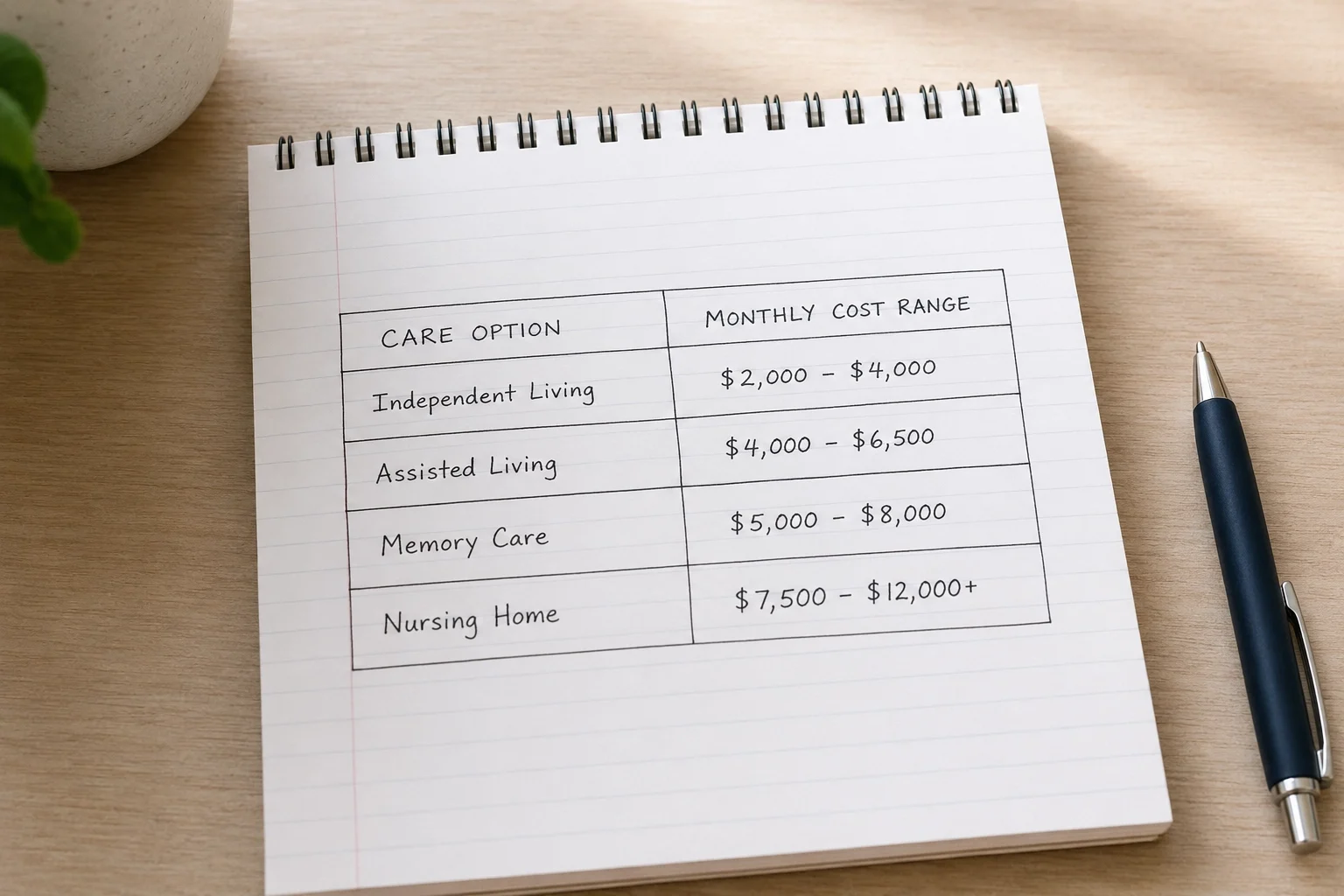
Independent living is for seniors who are fully independent but want to leave home maintenance, snow shoveling, and yard work behind. Wisconsin independent living monthly costs vary widely — from modest apartment-style communities at $2,500-$3,500/month to higher-end campus communities at $5,000-$7,000+/month. Costs typically cover rent, some meals, basic activities, and (in higher-tier communities) access to on-campus care escalation if needs change.
Independent living is usually paid privately — Wisconsin Medicaid generally doesn’t cover independent living because it’s not considered medical care. This is the stage where Wisconsin home equity gets converted into ongoing monthly income flow rather than care funding.
Assisted Living
Assisted living is for seniors who need some help with daily activities — medication management, bathing, dressing, transferring, meal preparation. Wisconsin assisted living costs by 2026 data:
- Statewide Wisconsin median: approximately $4,600-$5,500/month (varies by source).
- Milwaukee metro: approximately $5,073-$6,663/month depending on community and care level.
- Madison metro: approximately $6,120/month.
- Green Bay: approximately $5,777/month.
- Smaller markets (Eau Claire, Wausau, Racine): approximately $3,800-$4,650/month.
Wisconsin Medicaid may cover certain assisted living costs through Family Care and Family Care Partnership programs (Home and Community-Based Services waivers) for residents who qualify. We’ll get to that below.
Memory Care
Memory care is specialized assisted living for residents with Alzheimer’s, dementia, or other cognitive impairments. Memory care is typically delivered in a secured unit with specialized staff training and 24-hour supervision. Wisconsin memory care costs typically run $950-$1,375/month above the underlying assisted living rate — so total monthly costs commonly land in the $5,500-$8,000+/month range depending on community and care needs.
Memory care is one of the fastest-growing segments of Wisconsin senior care. Communities are adding memory care wings; new standalone memory care facilities are opening. The pricing tends to be at the higher end of senior care because of the staffing intensity required.
Nursing Home
Nursing home (skilled nursing facility) is for residents who need 24-hour medical-grade care that exceeds what assisted living provides. Wisconsin nursing home costs in 2026:
- Private room: approximately $9,855/month ($118,260/year). About 1% above national median.
- Semi-private room: approximately $8,943/month.
- 3-year nursing home total cost in Wisconsin: ~$381,423 per Wisconsin Long-Term Care Insurance industry data.
Wisconsin Medicaid (Wisconsin Nursing Home Medicaid) does cover nursing home care for residents who meet asset and income eligibility. We cover the eligibility framework below.
What Sellers Say About Cash House Buyer WI

“I hadn’t seen the house in 3 years. They still bought it.”
The property was falling apart and full of junk. Cash House Buyer WI gave me a fair offer and handled everything. I didn’t have to step inside once.

Jason Beezely
“The city was threatening to fine me. Cash House Buyer WI stepped in fast.”
I thought I was out of options. They gave me a cash offer in one day and closed before things got worse.

Pamela Newsom
How a Typical Wisconsin Home Sale Funds Senior Care
Consider a couple in Wauwatosa, both 78, selling a paid-off 1960s ranch worth $285,000. After closing costs, they net approximately $265,000. Their combined monthly Social Security is $3,500 ($42,000/year). Looking at assisted living at $5,800/month combined ($69,600/year). Federal estate tax not applicable. Wisconsin estate tax not applicable. Wisconsin inheritance tax not applicable. The full $265,000 is theirs to deploy.
| Care Level | Annual Cost | Years $265K Funds (Solo) | With $42K Income Stream |
|---|---|---|---|
| Independent Living ($3,500/mo) | $42,000 | 6+ years | Indefinitely covered |
| Assisted Living ($5,800/mo) | $69,600 | ~3.8 years | ~9-10 years |
| Memory Care ($7,000/mo) | $84,000 | ~3.2 years | ~6-7 years |
| Nursing Home Private ($9,855/mo) | $118,260 | ~2.2 years | ~3.5-4 years |
These are illustrative numbers — actual outcomes depend on care progression, additional income sources (pensions, IRA distributions), unforeseen expenses, and care level escalation over time. But the math shows the typical Wisconsin home sale provides a meaningful funding bridge, especially when combined with monthly income streams. For longer care timelines, Wisconsin Medicaid eventually becomes relevant once assets reach the eligibility threshold.
Wisconsin Family Care and Family Care Partnership Programs
Wisconsin has state-specific managed long-term care programs called Wisconsin Family Care and Family Care Partnership. These programs help seniors stay in the community — at home, in assisted living, or in residential care apartment complexes — rather than entering nursing homes prematurely. The programs are funded jointly by Wisconsin Medicaid and Medicare and serve seniors who meet specific functional and financial eligibility criteria.
Family Care offers Self-Directed Supports (SDS), which means participants can self-direct their care including the option to hire family members as paid caregivers. Family Care Partnership combines Medicaid and Medicare into a single coordinated plan. Both programs require Wisconsin Medicaid eligibility (which involves the 5-year lookback we cover in Cluster 3).
For Wisconsin families thinking about senior care, Family Care can substantially reduce private-pay costs once eligibility is established — and the home sale + 5-year-lookback timing can affect when eligibility is achievable. This is a real consideration that doesn’t apply in most other states the same way.
Wisconsin Medicaid Long-Term Care — Asset and Income Limits
Wisconsin Medicaid Long-Term Care covers nursing home care, certain assisted living through Family Care, and home and community-based services through HCBS waivers. The 2026 financial eligibility framework per Wisconsin Department of Health Services:
- Single applicant: $2,000 asset limit, $2,982/month income limit.
- Married couple, both applying: $4,000 combined asset limit.
- Married couple, one applying: the non-applicant spouse can retain a Community Spouse Resource Allowance (CSRA) up to the federal limit (in 2026, generally $157,920 — Wisconsin uses the federal maximum).
- Countable assets include: bank accounts, retirement accounts (in pay status counts as income), stocks, bonds, CDs, cash.
- Non-countable assets include: the home (while occupied by the applicant or spouse, up to a federal equity limit), one car, certain pre-paid funeral expenses, irrevocable funeral trusts, and Medicaid Compliant Annuities.
The home is initially exempt while the senior (or a spouse) lives there. Once the senior moves to a nursing home permanently, the home typically becomes a countable asset. Selling the home converts the exempt asset to countable cash, which has Medicaid eligibility implications addressed in Cluster 3.
Wisconsin Long-Term Care Partnership Program
The Wisconsin Long-Term Care Partnership Program combines private LTC insurance with Wisconsin Medicaid asset protection. For every dollar paid by a qualifying Partnership LTC policy, a dollar of assets is protected from Wisconsin Medicaid’s asset limit AND protected from Medicaid estate recovery. This is a real Wisconsin-specific benefit that few competing senior-care content sources cover.
For Wisconsin families who already have a Partnership-qualifying LTC policy, the home equity gets additional protection. For families without one, the Partnership program is generally not available to new applicants once care is already needed — but it’s worth knowing the program exists for younger family members thinking about their own future planning.
Frequently Asked Questions
What does assisted living cost in Milwaukee?
Milwaukee assisted living typically runs approximately $5,073-$6,663/month per 2024 Genworth Cost of Care Survey data. The higher end reflects more service-rich communities and higher levels of care; the lower end reflects basic assisted living. Memory care adds $950-$1,375/month on top.
What does a Wisconsin nursing home cost?
A private room in a Wisconsin nursing home runs approximately $9,855/month ($118,260/year) in 2026 — about 1% above the national median. Semi-private rooms run approximately $8,943/month. Wisconsin Medicaid Nursing Home Medicaid covers nursing home care for residents who meet asset and income eligibility ($2,000 asset limit for single applicant, $4,000 for married couple both applying).
What is Wisconsin Family Care?
Wisconsin Family Care and Family Care Partnership are state-specific managed long-term care programs under HCBS waivers. They help seniors stay in the community — at home, in assisted living, or in residential care apartment complexes — rather than entering nursing homes prematurely. Family Care offers Self-Directed Supports including the option to hire family members as paid caregivers. Both require Wisconsin Medicaid eligibility.
What is the Wisconsin Long-Term Care Partnership Program?
Selling the home at fair market value does not create a lookback problem by itself — the senior receives full value in exchange. The lookback issues arise from what happens AFTER the sale, particularly gifts of sale proceeds to children, charitable donations, or transfers to certain trusts within the 5-year window. Consult a Wisconsin elder law attorney for planning before major decisions.
Where a Cash Sale Fits in the Funding Picture
A cash sale of the Wisconsin family home converts illiquid equity into liquid funds quickly. Several scenarios where this is the right tool:
- Senior moving to independent living or assisted living with a defined entry timeline. Cash close in 7-14 days lines up with admission timeline; a traditional financed sale running 60-120 days may not.
- Senior moving to nursing home after a sudden health event. The home is no longer occupied by the senior; it may not be in market-ready condition; the family needs to fund care immediately. Cash sale closes the procedural loop.
- Family planning for Wisconsin Medicaid eligibility within a defined timeline. The home sale + structured use of proceeds (Wisconsin elder law attorney involvement) can advance eligibility while respecting the 5-year lookback considerations covered in Cluster 3.
Call me at (414) 246-0032 or email Mike@cashhousebuyerwi.com to talk through the funding math for your specific situation. — Mike.